
The Best Sleep Sounds for Different Types of Insomnia
Not all insomnia is the same - and neither should your sleep sounds. Here's which noise colors and acoustic therapies work best for sleep onset, maintenance, and early morning insomnia.
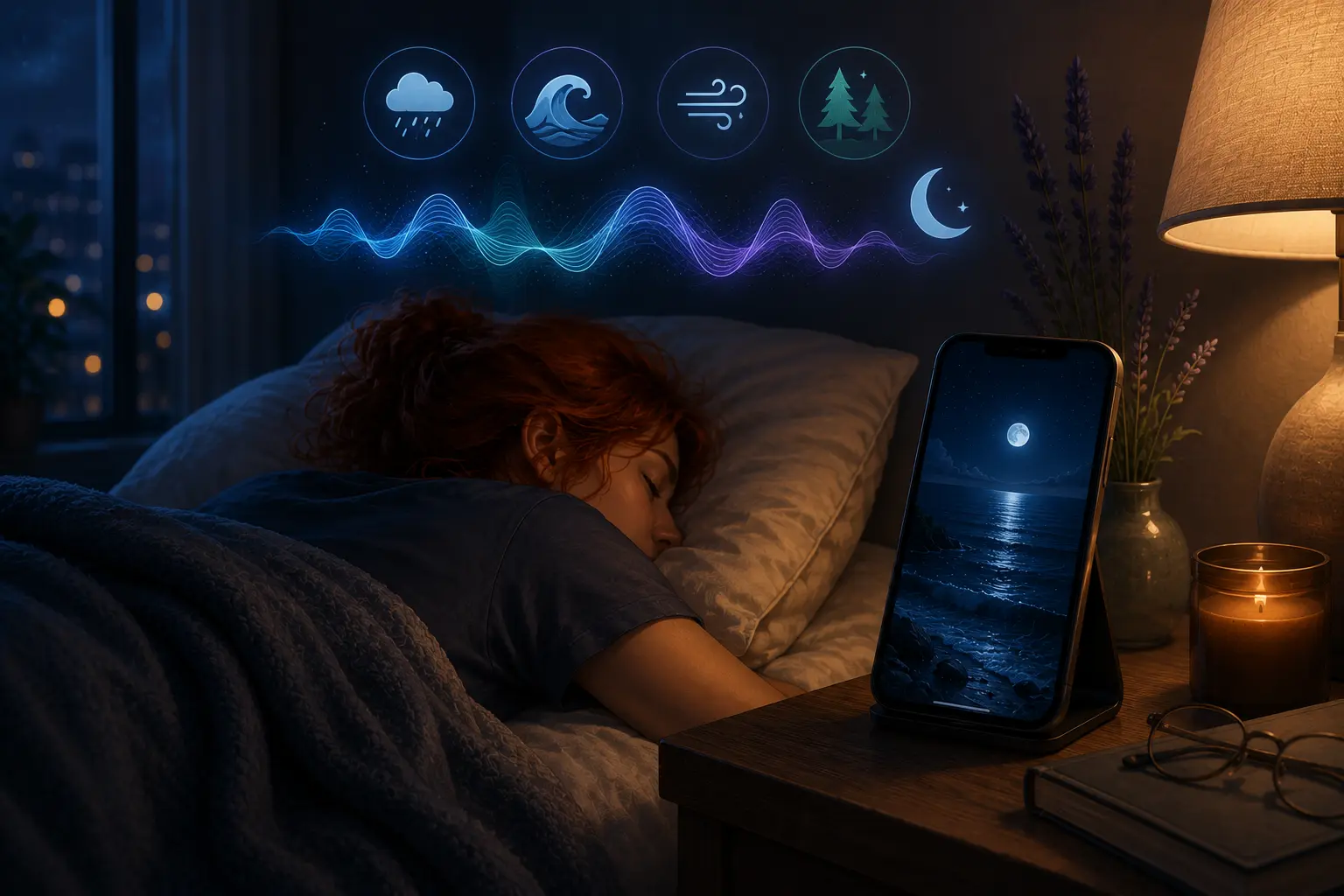
Not all insomnia is the same - and the one-size-fits-all "white noise" approach isn't cutting it. A 2022 systematic review found that while white noise helped 33% of people, pink noise worked for nearly 82%. But the right sleep sound depends on your specific insomnia type and what's actually keeping you awake.
Whether you're staring at the ceiling at midnight, jolting awake at 3 a.m., or giving up before dawn, the science says you can match the sound to the problem. Here's which sleep sounds actually work - and why.
Understanding Your Insomnia Type
Before you scroll past the sound machine section at Target, know what you're treating. Insomnia splits into distinct types, and each responds differently to acoustic intervention.
Sleep onset insomnia - the classic "I'm in bed but my brain won't shut up" problem. You spend 20–30+ minutes tossing and turning before sleep finally comes. This drains your total sleep time, and you feel it the next day.
Sleep maintenance insomnia - you fall asleep fine, but wake up at 2 a.m. or 3 a.m. and lie there for 20–30 minutes (or hours) unable to get back down. About 1 in 5 people with insomnia experience this type. Fragmented sleep is just as brutal as not falling asleep at all.
Early morning insomnia - you wake at 5 a.m. when you meant to sleep until 7, and you're done. No falling back asleep. This has a sneaky cascade effect: wake too early, hit a wall by afternoon, sleep earlier the next night, wake earlier the next morning.
Most people have mixed insomnia - a combination of all three. Don't be surprised if you recognize yourself in more than one description.
The Colored Noise Breakdown
Sound color refers to how frequencies are distributed - and the science shows it makes a real difference in sleep outcomes.
Pink Noise: The Research Winner
Pink noise emphasizes lower frequencies more than higher ones, creating a softer, deeper sound than white noise. Think rustling leaves, steady rainfall, or ocean waves. It's the sound that doesn't grate on your ears at 2 a.m.
Why it works: A 2022 systematic review found pink noise delivered positive results in 81.9% of cases - the highest of any single sound type. Some research suggests that when pink noise synchronizes with your brainwaves, it can enhance deep sleep and support memory consolidation, especially in older adults.
Best for: Sleep maintenance insomnia and anyone sensitive to white noise's harsh edge. If sudden sounds jar you awake, pink noise's deeper tone masks those disruptions without sounding like radio static.
Brown Noise: For Anxiety and Stress
Brown noise (also called red noise) doubles down on low frequencies - imagine the rumble of distant thunder or heavy rainfall. It's deeper and more visceral than pink noise.
Why it works: The low, consistent tones are soothing for racing minds. Brown noise is particularly effective at masking repetitive low-frequency disruptions like a furnace kicking on or an air conditioner cycling - sounds that don't register consciously but jar you awake anyway.
Best for: Sleep onset insomnia paired with anxiety or stress, or when environmental noise (HVAC, traffic rumble) is the real culprit. If your mind spirals at bedtime, the steady rumble of brown noise can help settle your nervous system.
White Noise: The Gateway Sound
White noise contains all audible frequencies at equal volume - a continuous "shhhh" like static or a waterfall. It's been the sleep-tech standard for decades.
Why it works: Effective at masking sudden, sharp noises that would otherwise wake you. For light sleepers in noisy environments, it works reliably.
Best for: Sleep onset insomnia when you have a racing mind, or when you need immediate noise masking. Research found white noise effective in 33% of cases - solid but not exceptional. Many people find it too harsh for sustained listening, so if white noise feels grating after 10 minutes, switch to pink or brown.
Nature Sounds: The Wild Card
Rain, streams, flowing water - a PNAS meta-analysis found water-based nature sounds had the greatest positive health outcomes among all nature sound types. They combine the masking effect of colored noise with the psychological calming of natural environments.
Why it works: Your brain recognizes these as familiar, low-threat sounds. The unpredictability of rain (unlike monotone white noise) keeps your mind gently engaged without triggering alertness. Studies show people fall asleep faster and report better sleep quality with nature sounds than with white noise alone.
Best for: Any insomnia type, especially if colored noise feels artificial. Nature sounds are the gateway for people skeptical of "just noise" - try rain or ocean waves and see how your brain responds after a week.
Emerging Science: Binaural Beats
Binaural beats play slightly different frequencies in each ear, and your brain perceives a "beat" that some research suggests can entrain your brainwaves into sleep-conducive patterns.
Delta frequency beats (around 3 Hz) are designed to mimic the slow brainwaves of deep sleep. A 2020 study found that combined binaural beats (alpha, theta, and delta frequencies) improved sleep quality and insomnia severity scores for students. Delta wave binaural beats specifically showed participants reporting enhanced sleep quality after one week of use.
The caveat: Binaural beats require headphones - your ears need to receive different frequencies - which doesn't work for everyone at night. Results are more mixed than colored noise, and some people report no effect. But for sleep onset insomnia paired with racing thoughts, it's worth a week of experimentation.
Best for: Sleep onset insomnia and anxiety-driven sleeplessness. Try 3 Hz delta binaural beats for 30 minutes before sleep to prime your system, then switch to another sound for the full night if needed.
Matching Sound to Your Insomnia Type
Here's the practical breakdown:
| Insomnia Type | Best Sounds | Why | Pro tip |
|---|---|---|---|
| Sleep onset | Pink noise, brown noise, delta binaural beats | Calms racing mind, masks internal distractions | Use for 30 min before bed, continue through night |
| Sleep maintenance | Pink noise, nature sounds, white noise | Masks abrupt environmental sounds that cause mid-night waking | Keep volume very low so it doesn't jolt you |
| Early morning | Brown noise, nature sounds | Grounds waking brain, prevents anxiety spiral | Try a 15–20 min loop starting when you first wake |
| Mixed | Pink noise, nature sounds (rain) | Balances calming effect across all three types | Rotate sounds weekly to prevent adaptation |
The Volume Rule
This is non-negotiable: keep sound just loud enough to hear, never loud enough to cause arousal. If you're "listening" to your sleep sound, it's too loud. It's a backdrop, not a performance.
How to Set Yourself Up for Success
Week one: pick one sound, commit to it. Your brain needs consistency to build the sleep association. Switching between white noise, brown noise, and rain sounds every night confuses your system. Pick pink noise or nature sounds and stick with it for at least 7 days.
Check your delivery method. Earbuds work, but can cause discomfort overnight. A bedside speaker set low is often better. Some people use a sleep sound app on a phone placed face-down on the nightstand - far enough that the screen light doesn't bother them, close enough that the volume is right.
Track what works. Keep a sleep diary for one week: which sound did you use, what time did you fall asleep, how many times did you wake, how rested did you feel? Tracking helps identify patterns and makes it easier to discuss with a sleep specialist if needed.
Don't expect instant results, but do expect something. Some people sleep better the first night. Most need 3–5 nights for their brain to habituate. If a sound isn't helping after a week, switch - you're not doing anything wrong, your neurobiology just prefers a different frequency.
Layer in behavioral changes if needed. Cognitive behavioral therapy for insomnia (CBT-i) is the gold standard treatment for all insomnia types. Sleep sounds work best as part of a routine: consistent bedtime, cool dark room, no screens 30 minutes before bed, sound on repeat. The sound alone rarely solves chronic insomnia, but it's a powerful tool in the toolkit.
The Bottom Line
Not every sleep sound works for every person, but the research is clear: pink and brown noise outperform white noise for most people, nature sounds beat straight colored noise, and binaural beats show promise for anxiety-driven insomnia.
Your insomnia type matters - sleep onset, maintenance, and early morning each have different triggers, and the right sound addresses the specific one you face. Start with pink noise or rain sounds, keep volume low, give it a week, and measure what actually happens.

Frequently Asked Questions
Which sleep sound is scientifically proven to be the most effective?
Pink noise shows the highest effectiveness in research studies, with 81.9% positive findings in systematic reviews. However, the best sound depends on your specific insomnia type and personal preference.
Can I use sleep sounds if I have sleep maintenance insomnia?
Yes, but consistency is key. Sleep sounds help mask disruptive noises that wake you mid-night. For sleep maintenance insomnia specifically, cognitive behavioral therapy for insomnia (CBT-i) combined with background sound often yields the best results.
Is it safe to listen to sleep sounds all night?
Yes, as long as the volume is kept low - just audible but not loud enough to cause arousal. Many people use sleep sounds nightly as part of their routine. If you experience ear discomfort with earbuds, try a speaker instead.
How long does it take for sleep sounds to work?
Some people fall asleep faster on the first night, while others need a week or two to adjust. Consistency matters more than immediacy - your brain learns to associate the sound with sleep over time.
Do I need an app or can I use YouTube for sleep sounds?
YouTube is free and effective for trying different sounds. For ongoing use, a dedicated sleep sound app offers customizable soundscapes without ads, better sound quality, and sleep timers that fade out instead of cutting abruptly.
Newsletter
Stay in the loop
New articles and app updates, straight to your inbox.
Keep reading
Nature Sounds for Sleep Why Ocean Waves and Wind Calm Your Brain
Struggling to rest? Discover the science of using nature sounds for sleep, ocean waves, and wind sounds to block disruptions and trigger deep relaxation.
White Noise v Brown Noise - Which is Better for Sleep?
Unpack the science of white noise v brown noise for sleep. Learn how different frequencies like brownian noise mask distractions and help quiet a racing mind.