
White Noise v Brown Noise - Which is Better for Sleep?
Unpack the science of white noise v brown noise for sleep. Learn how different frequencies like brownian noise mask distractions and help quiet a racing mind.
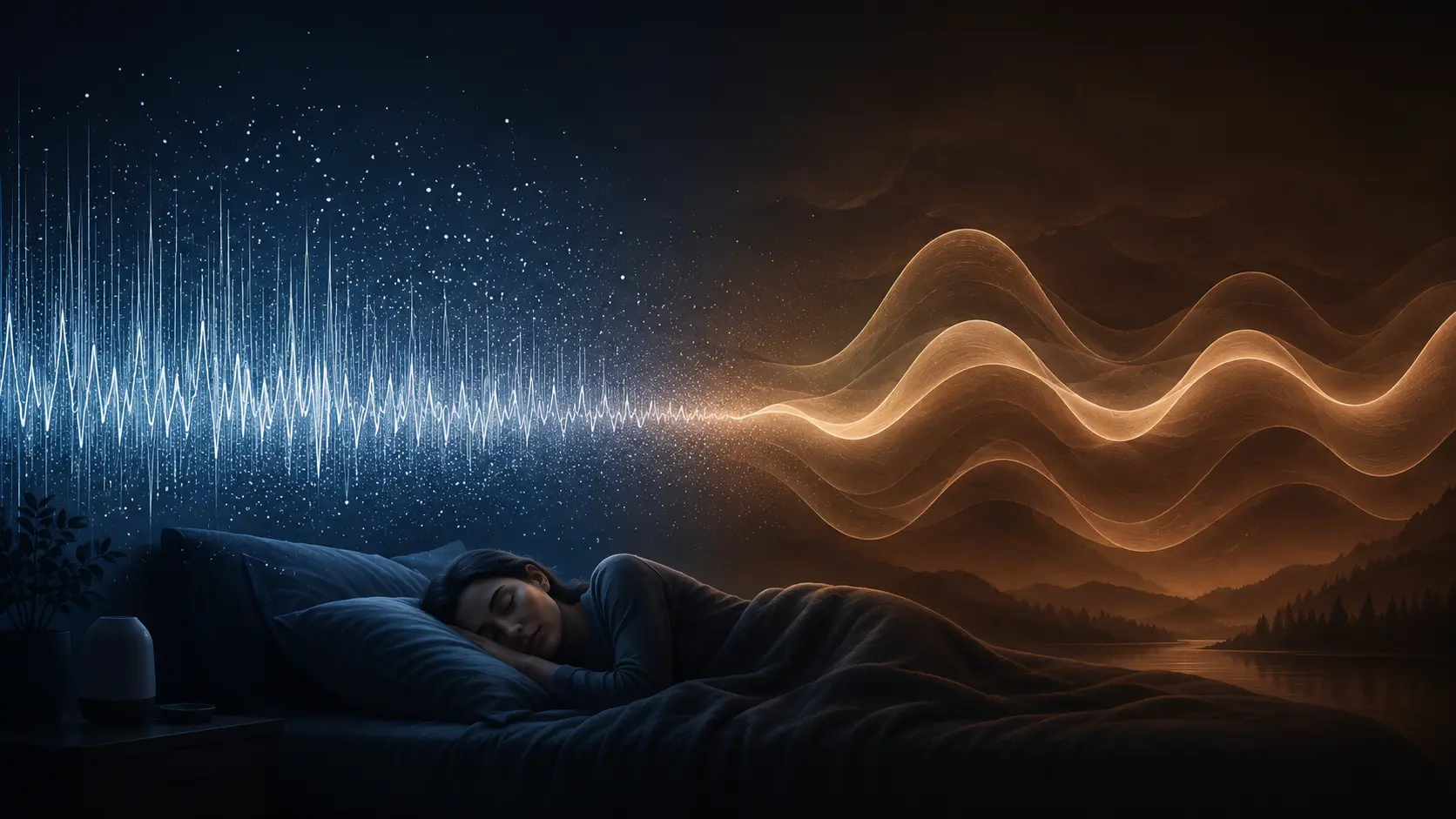
If you find yourself turning on background sounds to fall asleep, you are part of a massive movement. Every single month, millions of people look up white noise and brown noise to cure sleeplessness, mask outside traffic, or calm a racing mind before bed.
But when it comes down to brown noise v white noise, which one is actually better for your nightly rest?
While both are popular sound therapies, they possess completely different audio frequencies that affect your nervous system in unique ways. Here is the breakdown of the science behind brown v white noise, how they function in the brain, and how to choose the perfect frequency blanket for your bedroom.
The Science of Audio "Colors"
Just like white light contains all visible colors of the spectrum combined, white noise contains a completely equal distribution of energy across all audible frequencies from 20 Hz to 20,000 Hz.
When you listen to pure white sounds, you hear high, mid, and low frequencies all firing simultaneously at the exact same intensity. Mathematically, the spectral density is flat:
S(f) = constant
This creates a high-pitched "hissing" sound, closely resembling a television set stuck on static or a whistling air conditioner.
Enter the Deep Rumble of Brown Noise
Brown noise-also scientifically referred to as brownian noise sleep experts study-takes a different approach. It is named after Brownian motion (the random wandering of particles), which produces a specific mathematical signal.
Instead of an equal distribution across all frequencies, brown noise drops its energy by 6 decibels (dB) per octave as the frequency climbs. Its spectral density is inversely proportional to the square of the frequency:
S(f) ∝ 1/f²
This means high pitches are heavily dampened, while the deep, bass-heavy lower frequencies are cranked up. The result is a deep brown noise or a smooth brown noise that mimics a distant thunderstorm, heavy waterfalls, or the low rumble of a commercial airplane cabin.
Brown Noise vs White Noise for Sleep
To understand why millions are transitioning over to sleeping brown noise, look at how our brains perceive these distinct sound waves during the night.
| Metric | White Noise | Brown Noise |
|---|---|---|
| Acoustic Profile | Bright, sharp, high-pitched hiss | Deep, heavy, low-end rumble |
| Mathematical Signal | Flat spectral density (S(f) = constant) | Inversely proportional to frequency squared (1/f²) |
| Best Used For | Masking sharp, high sounds (alarms, sirens) | Soothing overactive thoughts, masking heavy bass traffic |
| Common Analogy | TV static, harsh air conditioner | Distant thunder, heavy waterfall, airplane cabin hum |
Why White Noise Can Sometimes Keep You Awake
Because white noise is highly saturated with high-pitched frequencies, it can occasionally feel too aggressive or abrasive for sensitive ears. If you have an overactive nervous system or suffer from sensory sensitivities, the continuous high hiss of white noise can inadvertently stimulate your brain’s alertness centers instead of calming them down.
Why Brown Noise is Leading the Sleep Revolution
A dedicated brown sound targets your brain's deep comfort pathways. The low-frequency rumble mirrors the acoustic environments humans experienced in nature for thousands of years.
Furthermore, neurological research indicates that steady, low-frequency soundscapes can synchronize with slow-wave sleep patterns (Delta waves), encouraging deeper, more restorative periods of REM sleep. If your thoughts race the moment your head hits the pillow, a calm brown noise acts as a gentle anchor that down-regulates neural pacing.
How to Deploy These Sounds for Maximum Masking
Your specific environment determines whether you should use white, pink, or brown frequencies:
- For City Living & Sharp Disruptions: If you live in an urban center plagued by high-pitched interruptions like car horns, sirens, or door hinges popping, white noise is highly efficient because its wide frequency mask rounds off sharp audio peaks.
- For Stress, Tinnitus, & Low Rumbles: If you deal with internal overthinking, the ringing of tinnitus, or low-end environmental pollutions like thumping apartment walls or bass speakers, play brown noise instead. The dense low-frequencies swallow up heavy vibrations perfectly.
Combining the Best of Both Worlds
You don't necessarily have to pick just one. If you look at the raw data, many individuals find their sweet spot by mixing multiple frequencies together-creating a custom cocktail of white noise brown noise pink noise elements.
By utilizing a multi-track sound mixer, you can stack a heavy base of smooth brown noise to create a warm foundation, then sprinkle in a minor accent of rain or wind to catch high-pitched anomalies. This removes the predictability of single, repetitive loops that can accidentally wake your subconscious mind.

The Bottom Line
When resolving the debate of brown noise v white noise, there is no singular wrong answer-only what works best for your unique auditory system. White noise provides an excellent acoustic shield for harsh environments, but for pure, deep relaxation and brownian noise sleep enhancement, the comforting low-end of brown noise remains unmatched.
If you want to transition away from artificial static, start experimenting with multi-layered, organic soundscapes, find a high-quality application that provides customizable dials, and see how a deeper frequency can completely transform your morning energy levels.
Newsletter
Stay in the loop
New articles and app updates, straight to your inbox.
Keep reading
The Best Sleep Sounds for Different Types of Insomnia
Not all insomnia is the same - and neither should your sleep sounds. Here's which noise colors and acoustic therapies work best for sleep onset, maintenance, and early morning insomnia.
Nature Sounds for Sleep Why Ocean Waves and Wind Calm Your Brain
Struggling to rest? Discover the science of using nature sounds for sleep, ocean waves, and wind sounds to block disruptions and trigger deep relaxation.