
Nature Sounds for Sleep Why Ocean Waves and Wind Calm Your Brain
Struggling to rest? Discover the science of using nature sounds for sleep, ocean waves, and wind sounds to block disruptions and trigger deep relaxation.

If you find it hard to drift off in a completely silent room, you are not alone. Millions of people look to natural soundscapes to escape racing thoughts, nocturnal city traffic, or noisy neighbors.
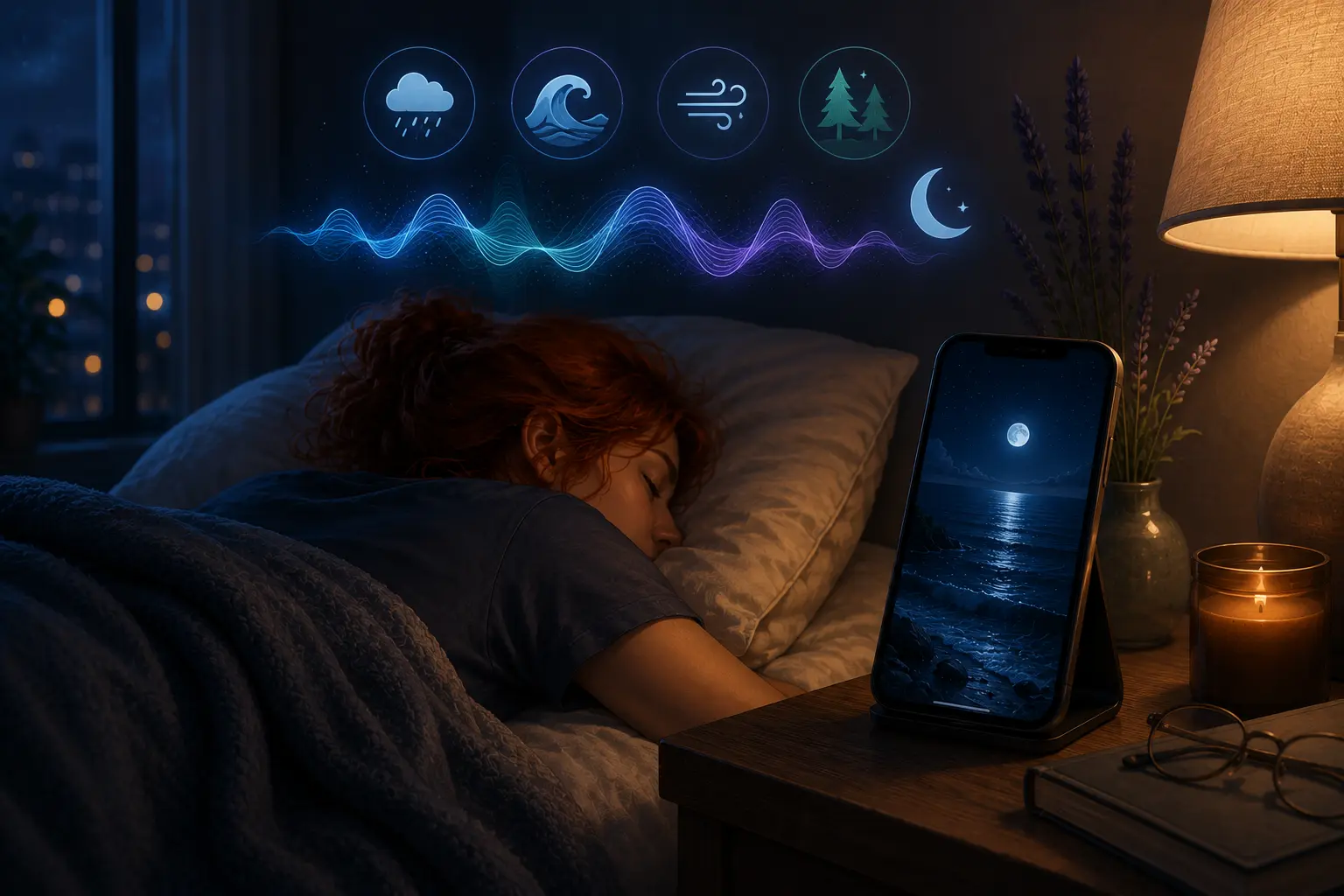
While heavy rain is a popular sleep aid, shifting your auditory environment to other elements of the natural world-like an ocean sound for sleep or a gentle howling wind sound-has a unique, profound impact on the brain.
Let's dive into the neural science behind why nature sounds for sleep are incredibly effective, how different natural elements mask noise, and how to create the ultimate organic sound profile.
The Cognitive Benefits of Nature Audio
Human brains are hardwired to process environmental signals continuously, even during deep stages of sleep. When you listen to artificial or abrupt sounds, your mind remains on high alert.
However, listening to nature noises for sleep triggers what psychologists call attention restoration. Organic sounds lack a distinct, repeating pattern or language structure. Because there are no words to decode or sudden changes to analyze, your prefrontal cortex relaxes.
Clinical research shows that listening to a relaxing nature soundscape shifts your autonomic nervous system away from the sympathetic state ("fight or flight") and directly into the parasympathetic state ("rest and digest").
Deep Frequencies vs. Wide Frequencies: Which is Best?
Your keyword statistics show that different elements carry massive search volumes. Each element impacts your sleeping environment differently based on its acoustic profile:
1. Ocean Waves (The Power of Infrasound)
Searching for an ocean sound for sleep or relaxing ocean wave sounds is highly popular for a structural reason: the rhythmic crash and retreat of waves perfectly mimics the frequency of human breathing patterns during deep rest.
The sound profile of ocean waves sweeps upward across high frequencies as water breaks, then plunges into heavy, low-frequency rumbles as it recedes. This makes it exceptional for masking deep baseline noises, such as thumping apartment walls, bass music, or distant highway traffic.
2. Wind Sounds (The Ultimate Acoustic Blanket)
Utilizing wind sounds for sleep or a steady sleep wind sounds loop creates a consistent, wide frequency cover. High winds filtering through trees generate a soft "hiss" that elevates the audio baseline of your bedroom.
If you are highly sensitive to sharp, sudden noises-like a door slamming, floorboards creaking, or a car alarm popping in the distance-the wide frequency coverage of wind effectively rounds off those audio spikes, allowing you to sleep completely uninterrupted.
| Sound Type | Best For Masking | Frequency Weight | Psychological Effect |
|---|---|---|---|
| Ocean Waves | Bass, heavy machinery, low traffic rumbles | Balanced Low-to-Mid | Deep relaxation, rhythmic breathing |
| Wind Sounds | Sudden sharp cracks, car alarms, floorboard creaks | Broad Mid-to-High | Mental quiet, feeling cozy/sheltered |
Why Synthetic Noise Fails Where Nature Succeeds
Many people try using digital static or artificial sound machines, but human brains are incredibly adept at recognizing looping audio patterns. If you use a basic audio track that loops a 10-second sound clip, your subconscious brain will eventually anticipate the loop boundary. This anticipation keeps your neural pathways subtly awake.
The secret to maximizing nature sounds music is stacking and variance. By blending multiple distinct elements together, you remove the predictability of a single track.
How to Build Your Custom Nature Soundscape
Instead of relying on a single loop, try combining several layers of organic audio to target the specific disruptions in your sleeping space:
- The Foundation: Set a consistent volume layer of relaxing ocean wave sounds to provide a heavy, comforting baseline.
- The High-End Shield: Add a secondary layer of soft forest wind to coat any sharp, high-pitched room interruptions.
- The Organic Realism: Drop a subtle, low-volume layer of Birdsong or Night Crickets on top. This subtle texture tricks your evolutionary survival brain into knowing that the environment is completely calm and safe for slumber.

The Bottom Line
A quiet room isn't always a peaceful room. If total silence causes your mind to race or leaves you vulnerable to sudden outside noises, shifting to organic soundscapes can completely revolutionize your sleep health.
Explore different combinations of wind, water, and nature sounds for sleep, set a gradual fade-out timer, and find the custom mix that lets your brain finally lower its guard and rest deeply through the night.
Newsletter
Stay in the loop
New articles and app updates, straight to your inbox.
Keep reading
The Best Sleep Sounds for Different Types of Insomnia
Not all insomnia is the same - and neither should your sleep sounds. Here's which noise colors and acoustic therapies work best for sleep onset, maintenance, and early morning insomnia.

White Noise v Brown Noise - Which is Better for Sleep?
Unpack the science of white noise v brown noise for sleep. Learn how different frequencies like brownian noise mask distractions and help quiet a racing mind.