
How Accurate Are Smartphone Compass Apps? (The Real Answer)
Smartphone compass apps vary widely in accuracy. Here's what affects the reading, how to test your phone's compass, and what to expect from modern Android devices.
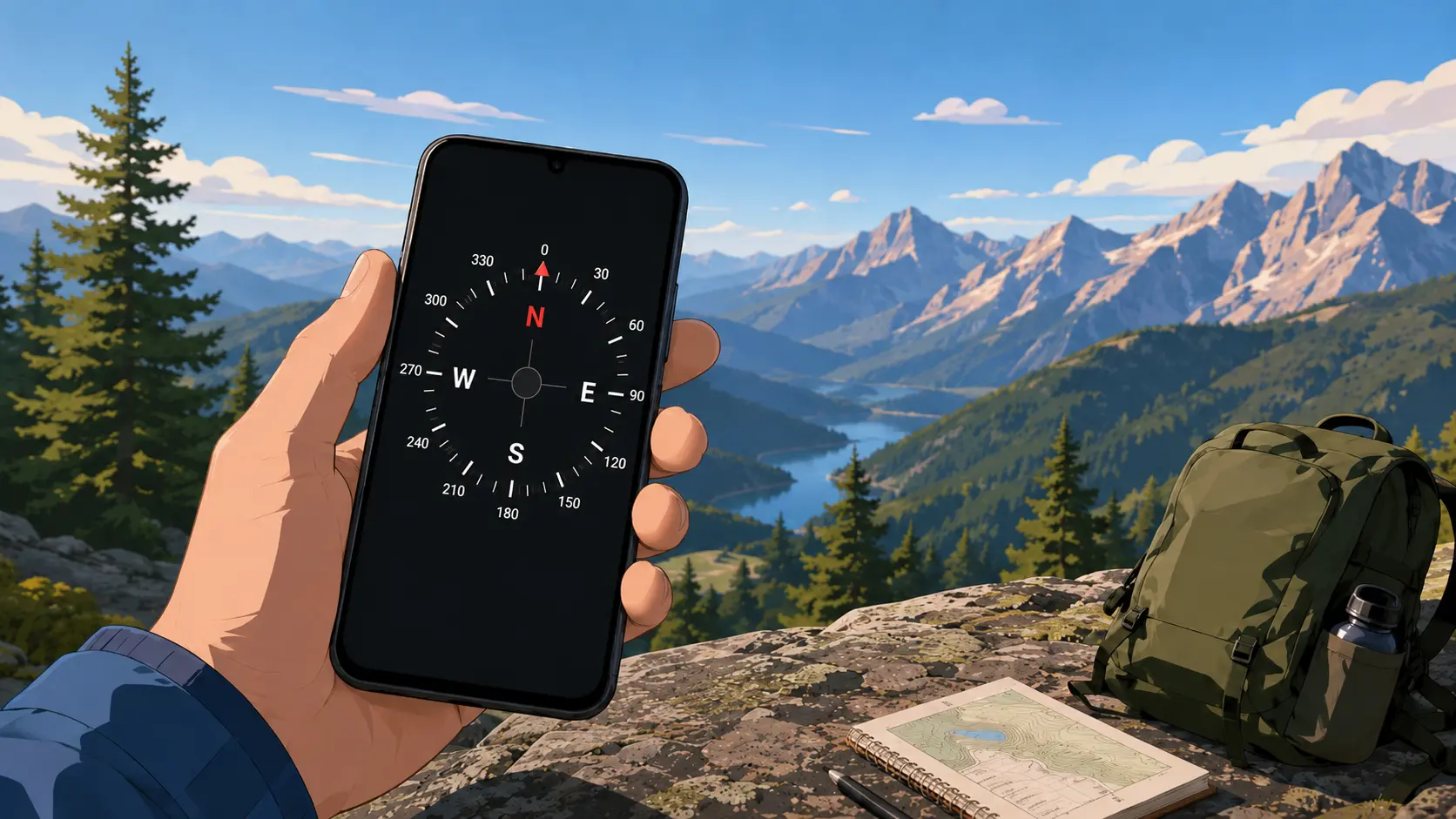
"Is my phone compass accurate?" is one of the most common questions people ask after downloading a compass app. The short answer: yes, modern smartphone compasses are surprisingly accurate - but with important caveats.
What Determines Compass Accuracy?
Your phone's compass is driven by a magnetometer - a chip that measures the strength and direction of the surrounding magnetic field. On most modern Android phones (post-2018), this sensor is accurate to within 1–3 degrees under ideal conditions.
Several factors affect the reading you actually get:
1. Interference from Nearby Objects
The magnetometer measures the total magnetic field it detects - which includes Earth's magnetic field plus any local sources. Metal objects, speakers, other electronics, phone cases with magnetic clasps, and even some table surfaces can skew the reading significantly.
Rule of thumb: Keep your phone away from metal surfaces and other electronics when reading the compass. Even a steel desk can introduce 5–10° of error.
2. Calibration
Smartphones require periodic calibration to work properly. The calibration involves physically rotating the phone in a figure-eight pattern to establish the sensor's orientation baseline. If the compass hasn't been calibrated recently - or if it was last calibrated near a source of interference - readings will drift.
Good compass apps prompt you to calibrate when they detect that the sensor data looks unreliable.
3. Phone Tilt and Hardware Quality
Magnetometers are calibrated for a specific range of tilt angles. Holding the phone at an extreme angle (nearly vertical or tilted sharply to one side) introduces additional error in many devices. High-end Android phones (Samsung Galaxy flagships, Pixel series) tend to have better magnetometers than budget devices.
4. Magnetic Declination
This isn't a hardware accuracy issue - it's a setup issue. If your compass app isn't applying magnetic declination correction, you'll get accurate magnetic bearings but your readings will be offset from true north by up to 20+ degrees depending on location. Make sure declination correction is enabled if you're using a map.
Real-World Accuracy Numbers
In practice, with a modern mid-range or flagship Android phone, properly calibrated, away from interference:
| Scenario | Typical accuracy |
|---|---|
| Ideal conditions (flat surface, away from metal) | 1–3° |
| Normal use (hand-held, slight interference) | 3–7° |
| Near interference (metal desk, speakers) | 10–30° |
| Uncalibrated sensor | Unreliable |
For casual navigation - finding your general heading while hiking, orienting a map, checking which direction your apartment faces - 3–7° is more than sufficient. For precision surveying, you'd use a dedicated instrument.
How to Test Your Compass
- Find a known direction - a road running exactly north-south works well if you can find one on Google Maps.
- Stand in the middle of the road (safely!) or on the sidewalk, well away from parked cars.
- Point your phone along the road and check the reading.
- Compare to the expected bearing from Google Maps.
Repeat with the phone rotated 180° to rule out systematic offsets. If both readings are within 5° of expected, your compass is in good shape.
The Bottom Line
Smartphone compasses are accurate enough for hiking, travel, photography orientation, and everyday navigation. They're not accurate enough for land surveying or precision engineering. For the vast majority of use cases, a well-calibrated phone compass outperforms casual use of a physical compass because it automatically handles declination correction and has a digital precision display.
If your readings seem off, calibrate first - that fixes 80% of problems before you start investigating hardware or interference.
Newsletter
Stay in the loop
New articles and app updates, straight to your inbox.
Keep reading

How to Find North Without a Compass (5 Reliable Methods)
Lost without a compass? Here are five proven ways to find north using the sun, stars, and natural landmarks - plus when to rely on your phone instead.
Navigate Offline: Why Your Phone Deserves a Real Compass App
Most navigation apps are built for cities and cloud connectivity. Here's why a lightweight offline compass app is what you actually need when you step away from the grid.