
What Is Magnetic Declination and Why Does It Matter for Navigation?
Your compass doesn't actually point to the North Pole - it points to magnetic north, which is different. Here's what magnetic declination is, why it matters, and how to account for it.

If you've ever used a compass alongside a map and noticed your route was slightly off, magnetic declination might be the reason. It's one of the most misunderstood concepts in navigation - and one of the most important to get right.
What Is Magnetic Declination?
Magnetic declination is the angle between magnetic north (where your compass points) and true north (the geographic North Pole, where all meridian lines converge).
Earth's magnetic field doesn't emerge from the geographic North Pole - it emerges from a separate point called the magnetic north pole, which is currently located in the Canadian Arctic near Ellesmere Island. Because of this offset, a compass needle pointing to magnetic north is pointing in a slightly different direction than true north.
The difference is measured in degrees and can be:
- East declination - magnetic north is east of true north. Your compass reads higher than the true bearing.
- West declination - magnetic north is west of true north. Your compass reads lower than the true bearing.
How Much Does It Vary?
The size of the declination depends entirely on where you are. It ranges from nearly 0° near the line of zero declination (which runs roughly through the middle of North America and through parts of Africa) to more than 20° in some coastal and polar regions.
In London, the current declination is about 1.5° west. In Seattle, it's around 15° east. In Sydney, it's 12° east. In Moscow, it's around 10° east.
The declination also changes slowly over time as the magnetic pole drifts - typically by less than 1° per decade, but it adds up over years.
Why Does It Matter?
For casual use - finding your general direction, navigating in a city - magnetic declination is irrelevant. The error is too small to matter.
For serious navigation - backcountry hiking, sailing, flying, or any situation where you're using a compass alongside a topographic map - it matters a lot. A 15° declination error means that for every kilometer you travel, you'll be 260 meters off course. Over ten kilometers, you'll miss your target by 2.6 km.
How to Correct for It
Manual correction:
- Look up the current declination for your location (the NOAA website publishes a declination calculator).
- If declination is east, subtract it from your magnetic bearing to get true bearing.
- If declination is west, add it to your magnetic bearing.
The classic mnemonic: "East is least, west is best." East declination → subtract. West declination → add.
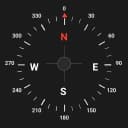
Automatic correction: Most compass apps - including ours - can apply your local magnetic declination automatically using your phone's GPS location and a declination model. When this is enabled, the bearing you see is already corrected to true north with no mental arithmetic required.
How the Magnetic Pole Moves
The magnetic pole isn't static. It's been drifting northward at roughly 55 km per year over the past two decades, accelerating from its earlier rate of about 10 km per year. This drift is caused by fluid motion in Earth's liquid outer core.
In practical terms, this means declination values published on paper maps become outdated. If you're using a map printed more than a few years ago, verify the declination value against a current source before any navigation that depends on precision.
Understanding magnetic declination won't make your compass more accurate - but it will make you more accurate when using it.
Newsletter
Stay in the loop
New articles and app updates, straight to your inbox.
Keep reading
How Accurate Are Smartphone Compass Apps? (The Real Answer)
Smartphone compass apps vary widely in accuracy. Here's what affects the reading, how to test your phone's compass, and what to expect from modern Android devices.

How to Find North Without a Compass (5 Reliable Methods)
Lost without a compass? Here are five proven ways to find north using the sun, stars, and natural landmarks - plus when to rely on your phone instead.