
Why Do Rain Sounds Help You Sleep? (The Science Behind Rain Noise for Sleep)
Discover the neurobiology of acoustic masking, why the sound of rainfall to sleep works so well, and how to combine rain and white noise for the ultimate rest.
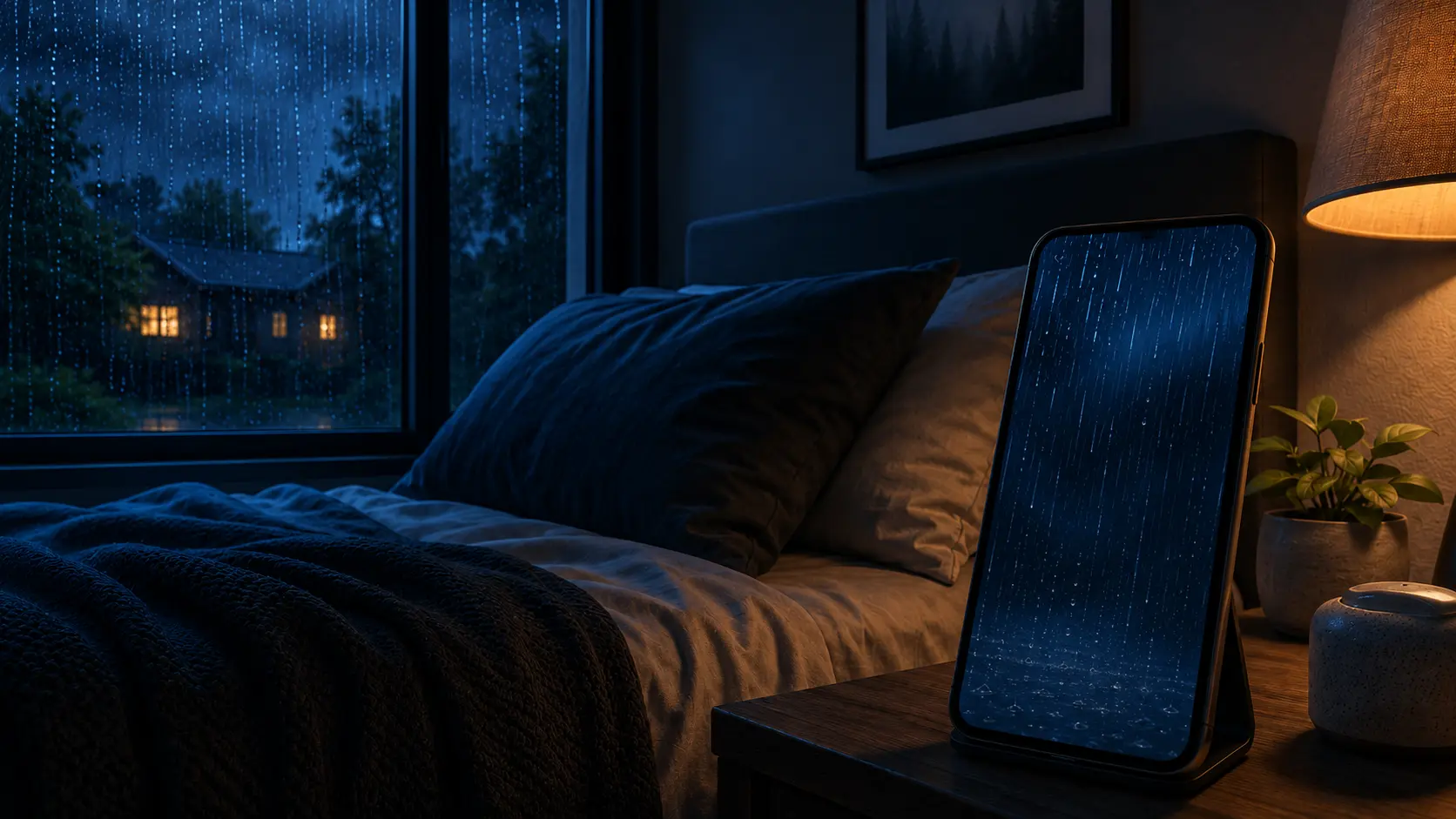
Ever wondered why a sudden storm makes you want to curl up and drift off? Or why millions of people queue up a steady rain rain sound on their phones to quiet a racing mind at 2 AM?
It turns out our collective love for rain sounds for sleeping isn’t just a cozy psychological preference it is deeply rooted in neuroscience, cognitive psychology, and evolutionary biology. Here is the real science behind why using a rain noise for sleep heals our nightly rest patterns, and how you can build the ultimate soundscape to block out disruptions.
1. The Power of "Acoustic Masking"
Common sense tells us that we wake up in the middle of the night because an external noise is loud. Neurobiology tells us something different: our brains wake up because of a sudden change or spike in sound.
Your brain doesn’t completely shut off when you sleep; it stays alert as an ancient warning system. A passing car, a creaking floorboard, or a barking dog creates an abrupt jump in auditory data that triggers your brain's alarm bell (the amygdala).
Using the steady sound of rainfall to sleep introduces a concept called acoustic masking. A continuous, unvarying ambient sound raises the baseline audio threshold of your bedroom. Because the background level is higher, sudden ambient spikes fail to stand out, meaning they fail to wake your brain.
| Sound Environment | Baseline Noise | Sudden Event (Dog Bark) | Result |
|---|---|---|---|
| Dead Silent Room | ~30 dB | 75 dB (+45 dB spike) | Wake up startled |
| Rain Masked Room | ~55 dB | 75 dB (+20 dB spike) | Sleep uninterrupted |
2. Rain is a Natural "Pink Noise" Powerhouse
You have likely heard of white noise, but a real-world rain storm noise is actually one of nature’s best examples of pink noise.
While white noise has equal energy across all audible frequencies (often sounding like harsh, high-pitched TV static), pink noise has deeper, richer lower frequencies. Human brains perceive pink noise as incredibly well-balanced, soothing, and organic.
Clinical studies show that listening to steady pink noise actually slows down human brain waves. It coaxes neural activity away from rapid beta waves (stressing, overthinking) and smoothly guides them into steady alpha and theta waves. This mimics the brain’s natural transition into deep sleep states.
3. Primal Evolutionary Safety
From an evolutionary standpoint, combining rain and thunder sounds to help you sleep sends a subconscious signal to our primal biology that we are secure.
Throughout human history, predatory animals rarely hunted in heavy storms, and inclement weather forced our ancestors to seek shelter and rest. The steady rhythm of rain tells your primitive survival brain: "You are safe inside, threats are minimal, and nothing is coming to get you. It is okay to lower your guard."
How to Mix the Ultimate Sleep Soundscape
While a single loop of basic rain can be effective, human brains eventually get used to repetitive audio clips. If your subconscious detects a distinct, repeating "loop point" in a short digital track, it can inadvertently break your sleep cycle.
To create a highly effective, dynamic acoustic shield, you should layer multiple nature sounds for sleep using a sound mixer app:
- The Foundation: Start with a wide frequency track like Heavy Rain or Suburban Rain.
- The Low-End Masking: Blend in a layer of rain and white noise or a low fan hum to block out heavy baselines like traffic or thumping apartment walls.
- The Organic Texture: Add sporadic, natural accents like Distant Thunder or an ocean sound for sleep to keep the soundscape feeling natural and deep.
By utilizing an app with individual volume sliders, you can balance these rain sounds sleep sounds into a custom mix perfectly tuned to mask whatever specific noises plague your neighborhood.

The Bottom Line
A premium rain noise for sleep doesn’t work by drugging your brain; it works by clearing a peaceful, predictable auditory space where your mind feels safe enough to let go.
If you struggle to stay asleep through the night, stop forcing yourself to sleep in total silence. Experiment with multi-layered pink noise, find a high-quality app that offers rain sounds for sleep free of subscriptions, turn on a gentle fade-out timer, and give your brain the steady acoustic blanket it needs to rest deeply until morning.
Newsletter
Stay in the loop
New articles and app updates, straight to your inbox.
Keep reading
The Best Sleep Sounds for Different Types of Insomnia
Not all insomnia is the same - and neither should your sleep sounds. Here's which noise colors and acoustic therapies work best for sleep onset, maintenance, and early morning insomnia.
Nature Sounds for Sleep Why Ocean Waves and Wind Calm Your Brain
Struggling to rest? Discover the science of using nature sounds for sleep, ocean waves, and wind sounds to block disruptions and trigger deep relaxation.